The Future of Findability: Master Predictive Search UX Patterns in 2026
Introduction: The Death of the "Search Bar"
As we move through 2026, the very concept of a "search bar" is undergoing a radical transformation. For decades, the search box was a passive element—a digital filing cabinet where users typed a specific word and hoped the database would return a match. It was a reactive tool that placed the burden of "finding" entirely on the customer.
In the high-velocity e-commerce landscape of 2026, that burden has shifted. With the integration of Generative AI and Large Language Models (LLMs) into the core fabric of web development, search has become proactive. It is no longer about "Search"; it is about "Discovery."
Today’s shoppers—spoiled by the instantaneous, anticipatory nature of social media algorithms—no longer have the patience to filter through pages of irrelevant results. They expect the interface to read their intent, anticipate their needs, and serve the perfect product before the third keystroke. At Prateeksha, we call this Predictive Search UX. If your store’s search isn’t thinking two steps ahead of your customer, you aren't just losing a sale; you are losing brand authority.
Part I: The Psychology of Prediction in E-Commerce
Before we dive into the technical patterns, we must understand the "why." Predictive search works because it aligns with three core psychological principles of modern shopping:
Reduction of Cognitive Load: Every choice a user has to make is a "tax" on their brain. By predicting what they want, you remove the effort of typing, spelling, and filtering.
The Progress Principle: Humans feel a surge of dopamine when they see progress toward a goal. When the search bar completes a user's thought, it creates a "micro-win" that encourages them to continue to checkout.
The Paradox of Choice: Too many results lead to "analysis paralysis." Predictive UX narrows the field to the "Best Matches" instantly, making the decision-making process easier.
Part II: Core Predictive UX Patterns for 2026
1. Multi-Modal Visual Autocomplete
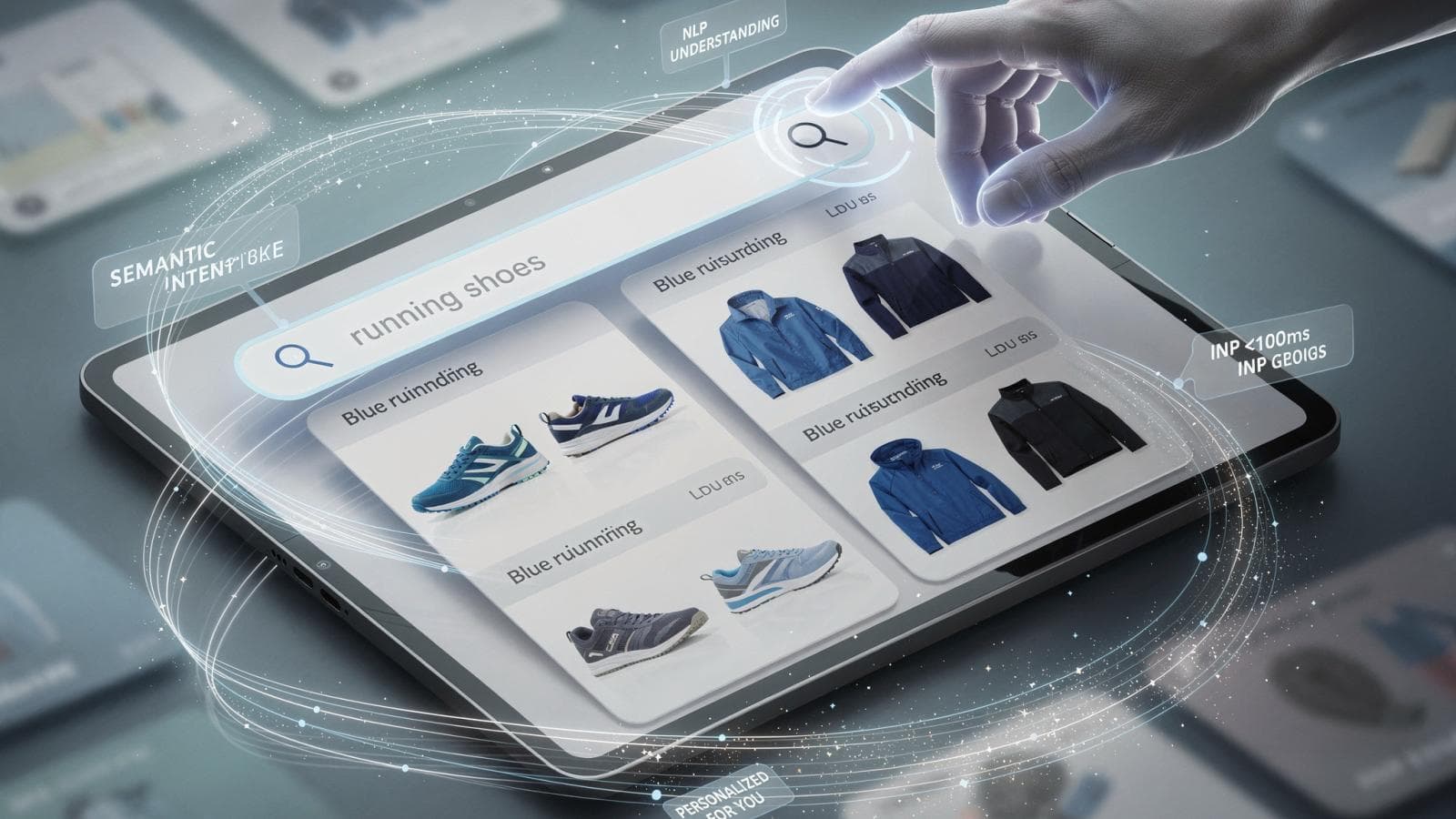
The "text-only" dropdown menu is a relic of the past. In 2026, the predictive dropdown is a mini-version of your entire storefront.
The Pattern: As the user types, the dropdown is divided into logical quadrants: Suggested Products (with thumbnails), Suggested Categories, Recent Searches, and Trending Now.
The Technical Edge: By using Custom Shopify Sections or headless frameworks, we ensure these images are optimized AVIF files that load in under 50ms.
UX Impact: Users can bypass the Search Results Page entirely. Clicking a thumbnail in the predictive dropdown takes them directly to the Product Detail Page (PDP), cutting the conversion path in half.
2. Semantic Intent and NLP (Natural Language Processing)
Keyword matching is dead. If a user searches for "summer wedding outfit," an old-school search bar looks for the words "summer," "wedding," and "outfit." If those specific words aren't in the product title, it fails.
The 2026 Pattern: Semantic search understands the concept. It knows that "summer wedding" implies linen fabrics, pastel colors, and breathable shoes.
Prateeksha Implementation: we integrate Vector Databases and LLMs to ensure your search bar understands "Vibes." A search for "Quiet Luxury" should return minimalist, high-end pieces, even if the word "luxury" isn't in the description.
3. "Ghost Text" and Inline Completion
Borrowing from the success of AI coding assistants and email smart-completions, inline ghost text is the new gold standard for speed.
The Pattern: While the user types "L-e-a-t-h-e-r," light gray "ghost text" appears ahead of the cursor suggesting " jacket for men." The user simply hits "Tab" or "Right" to accept.
UX Impact: This creates a frictionless "flow state." It makes the site feel intelligent and responsive, significantly reducing the "time-to-cart."
Part III: Advanced Personalization Patterns
In 2026, the search bar is the ultimate expression of your "Segment of One" marketing strategy.
1. History-Aware Suggestions
When a returning customer clicks into the search bar, it shouldn't be empty.
Pattern: Before a single letter is typed, the dropdown displays "Pick up where you left off," showing the last three products viewed or the last search query performed.
The 2026 Twist: If a user frequently buys "Vegan" products, the predictive engine automatically prioritizes vegan-certified items in the suggestions, even for generic queries like "shampoo."
2. Regional and Contextual Prediction
Your search bar should know where and when the user is searching.
Pattern: If a user in London searches for "boots" in November, the predictive search prioritizes "Waterproof Winter Boots." If a user in Sydney performs the same search at the same time, it prioritizes "Fashion Chelsea Boots."
Why it matters: Contextual relevance is the difference between a bounce and a buy.
Part IV: Handling the "No Results" Crisis
Even in 2026, AI doesn't always have the answer. However, the UX pattern for "Zero Results" has evolved from a dead end into a "Pivot Point."
1. AI-Driven "Did You Mean?"
Instead of a cold "0 results found," the predictive search should offer a "Helpful Alternative."
Pattern: "We don't have 'Blue Suede Boots' in stock, but here are our 'Navy Leather Boots' which are currently trending."
The Strategy: Use visual placeholders and "Similar Items" logic to keep the user moving forward. Never let a search end in a blank screen.
2. The "Search-to-Concierge" Handoff
If a complex query fails, the predictive dropdown should offer an AI Chatbot link or a "Notify Me When Available" option. This captures the lead even when the product isn't ready.
Part V: The Technical Foundation (Performance & SEO)
A predictive search bar is only as good as its speed. This is where Optimizing your site's Core Web Vitals becomes non-negotiable.
1. Interaction to Next Paint (INP)
In 2026, users expect feedback within 100ms. If your search bar "stutters" or lags while the user is typing, the "Predictive" feeling is lost, replaced by a feeling of a "broken" site.
Prateeksha Tip: We use "Debouncing" and "Throttling" techniques in our JavaScript to ensure that API calls don't overwhelm the browser's main thread, keeping the typing experience silky smooth.
2. Cumulative Layout Shift (CLS)
Predictive dropdowns often cause layout shifts when images load at different speeds.
Pattern: We implement Skeleton Loaders (light gray animated boxes) that hold the exact space for product thumbnails. This ensures the page stays stable, protecting your Google rankings and user trust.
3. SEO and Search Discovery
Predictive search isn't just for users; it’s for Google. By creating "Trending Search" sections within your dropdown, you create internal links to high-value collection pages, helping search engines discover and index your most important content.
Part VI: Implementing Predictive Search with Prateeksha
Building a 2026-ready search experience requires more than just a plugin; it requires a deep integration of design and data science. At Prateeksha, our development process for Predictive Search involves:
Search Logic Audit: We analyze your current search logs to see where users are dropping off and what "slang" they use.
Custom Shopify Sections Development: We build bespoke, high-performance search interfaces that align with your brand's unique aesthetic—moving far Beyond Templates.
API & LLM Integration: We connect your store to advanced search engines (like Algolia, Sajari, or custom Gemini-powered models) to provide true semantic understanding.
A/B Performance Testing: We measure the "Click-Through Rate" (CTR) on suggested products to continuously refine the predictive logic.
Part VII: Conclusion – The Competitive Moat of 2026
In the e-commerce world of 2026, the "moat" around your business isn't just your product—it’s your user experience. When a customer finds exactly what they need in three seconds because your search bar "just got them," you’ve earned more than a sale; you’ve earned a repeat customer.
Predictive Search UX Patterns are the bridge between a vast, overwhelming inventory and a personalized, intimate shopping experience. As we have seen, this requires a perfect harmony of Core Web Vitals, Custom Shopify Sections, and cutting-edge AI.
The question is no longer "Can users find what they are looking for?" but "How fast can you show them what they didn't even know they wanted?"
Take the Next Step with Prateeksha
Is your search bar stuck in the past? Don't let a "reactive" search experience drive your customers to the competition.
Visit Prateeksha.in today to request a Search Experience Audit. Let us show you how to transform your search bar from a simple text box into your store's most powerful sales engine.
Whether you need a custom-built Shopify Section for your discovery menu or a full-scale Core Web Vitals optimization, our team is ready to build your store for the future.